Dressed for an audience
Red cloth, worked gold, and a greatsword he knows how to use. The display is deliberate; the strength beneath it took years.

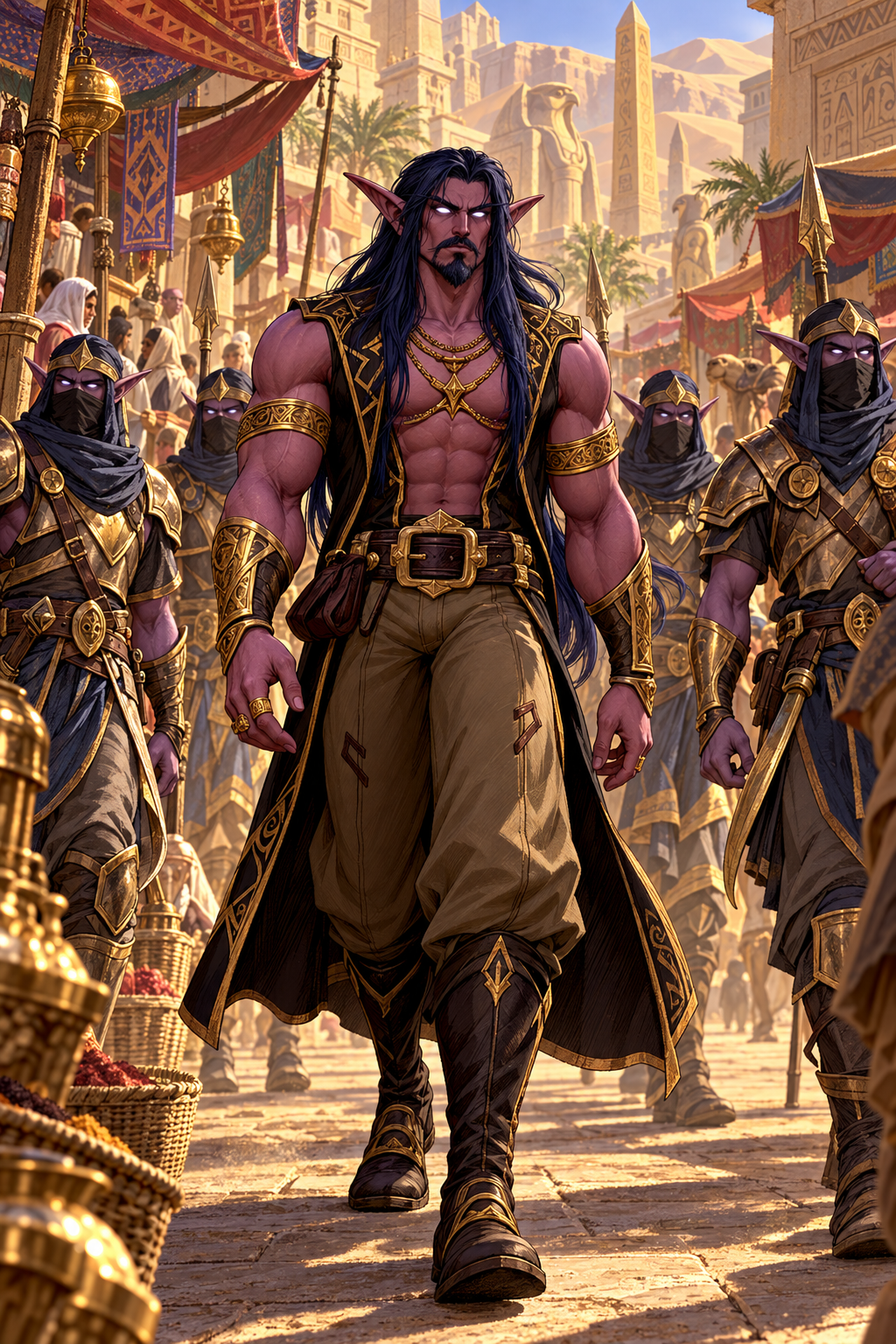
The leader of The Mercantile Cartel. Devilish in both looks and behaviour.
Iygos wears his money where you can see it. Gold at his throat and wrists, fine cloth, armour commissioned to fit a frame that scarcely needs the help. Long black hair falls past broad shoulders; beneath it, pale eyes give people a thorough looking-over. He is handsome, and quite aware of what that buys him.
He lets people finish their pitch. Sometimes he even smiles. The difficulty is knowing whether you have interested him, amused him, or made yourself useful in a way you had not intended.
Red cloth, worked gold, and a greatsword he knows how to use. The display is deliberate; the strength beneath it took years.
Even dressed for the heat, he brings the jewellery. There is usually someone close enough to hear an instruction.
His mother sold flowers. Iygos remembers her hands better than the shop: the stains on her fingers, the way she kept working while she listened for his father coming home. She did what she could to keep her son out of his way. Some evenings there was no managing it.
His father had returned from war changed. Drink made him louder, and young Iygos learned how quickly a room could turn against him. The rough treatment was meant, his father said, to make something of the boy. Iygos grew determined to leave, earn enough to look after his family, and never again depend on that man for anything.
He trained until he could barely lift his arms, then returned to it the next day. He learned the greatsword with the same stubbornness he later brought to a negotiation. In time, few people could have put their hands on him and expected to walk away.
The drinking followed him. He can afford a much better bottle than his father ever could. He dislikes the comparison.
During the Cataclysm, Iygos went to Uldum. Its temples and buried chambers caught his interest; what could be carried out of them held it. He gathered a small crew willing to break seals, clear passages, and ask few questions about who the contents belonged to.
Gold changed hands. Goblin buyers were often willing to pay, provided the price left room for their own profit. Iygos learned which dealers settled promptly and which ruins justified the cost of another expedition. The crew grew. Somewhere along the way, the name Mercantile Cartel began appearing on the arrangements.
Then came the patrons: wealthy people who wanted a discovery to their name and an adventure worth recounting over dinner. He charged handsomely to lead them into tombs and crypts. Most returned with less than they had imagined. A fortunate few found something valuable, and Iygos collected his fee either way.
There is very little doubt about who is in charge.
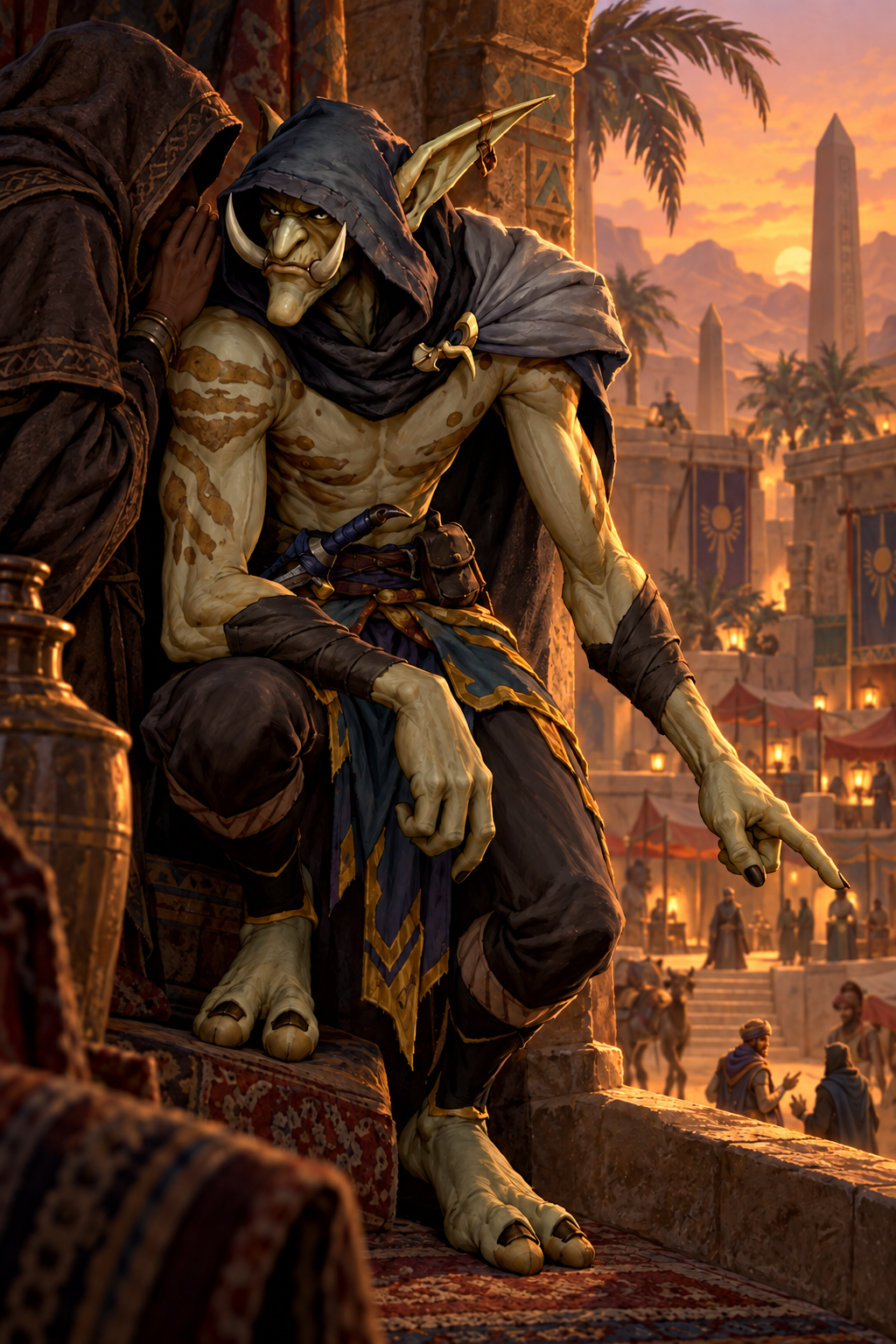
Tukto · Sandfury
Tukto listens. A name mentioned over a drink, a change of buyer, an expedition leaving earlier than arranged: small things travel surprisingly far when the right person hears them. The Sandfury has contacts enough to make it difficult to tell where his attention ends.
Iygos calls him his hand. When the Cartel’s leader wants something done, Tukto finds a way to make it happen, often through people who never meet the man paying for it. He has little use for Iygos’s public splendour. A quiet place nearby serves him well enough.
How much he tells Iygos, and what he keeps for himself, is Tukto’s business.

Iygos has the wealth he once thought would solve everything. He spends it freely on himself, enjoys being attended to, and has grown comfortable with people waiting for his approval. Within the Cartel, he is treated rather like a monarch. He has done little to discourage it.
There is always another route to open, another patron to flatter, another venture worth taking from someone less capable of keeping it. Whether any of this still serves the family he meant to provide for is a question he seldom invites.
For the moment, he is taking meetings.
Possible openings for roleplay.